September 2026
Inside This Issue
Coming into the fall months, September JC News is particularly light on actionable content. There are no new requirements or future changes requiring action. The issue largely promotes conferences, 2027 manuals, and other Joint Commission activities. We have summarized the limited content we think is worth your time.
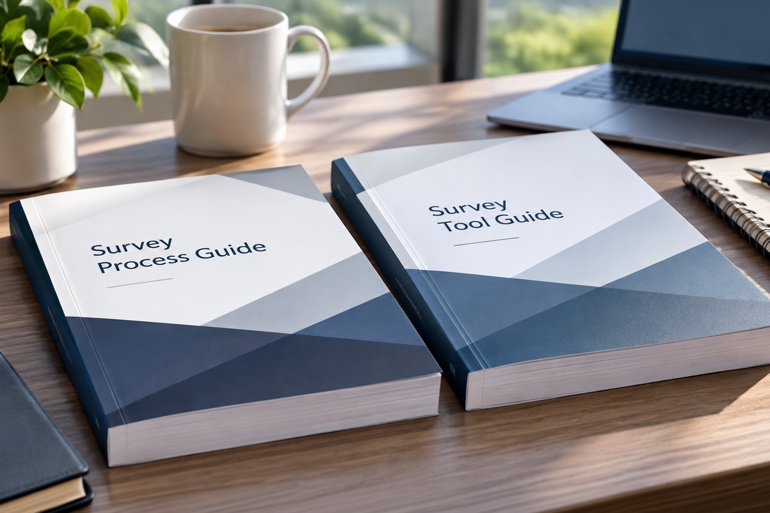 Download the Updated Survey Process Guides:
One very important note is that JC did publish updated Survey Process Guides (SPG). Interestingly, the new SPG was not mentioned in the September JC News, but on their website, you can find this new SPG described as a “major revision” that replaces the SPG that was effective Jan 1, 2026.
This new SPG can be found under the JC website under:
> Knowledge Library
> Support Center
> Survey Preparation
The most noticeable change is structural. Joint Commission has split the former 700+ page Hospital Survey Process Guide into two companion documents. The September SPG is now 386 pages and contains the survey process and CMS CoP-based evaluation modules, while the new 289-page Survey Tool Guide (STG) for the hospital program contains the detailed survey tools that previously were found in the back half of the SPG. Together, they are similar in length to the previous SPG.
ACTION REQUIRED: While much of the content is familiar the former SPG is now reorganized into two documents and updated a substantial number of the CMS evaluation modules and survey tools at the same time.
Three Take Aways:
- Review and replace the January SPG with both September documents.
- Review the revised Hospital Document List and update your preparation for day one.
- Make sure facility staff have the new STG, particularly because of the revised building-tour tools, elimination of K-Tag tool references, and the new construction and hyperbaric tools.
 Updated Accelerate PI Dashboard Reports for Stroke Centers:
Joint Commission has released updated Accelerate PI Dashboard Reports for Primary Stroke Centers and Comprehensive Stroke Centers. The reports include data through the first quarter of 2026 for organizations submitting chart-abstracted quality measure data through the Certification Measure Information Process (CMIP).
Field Impact — Review the Updated Stroke Dashboard with Your Quality Team
If your organization maintains Primary or Comprehensive Stroke Center certification, download the updated dashboard and include it in your next stroke program or quality review.
The September issue of EC News continues to offer meaty articles that you will want to review/read and act on. The issue includes useful checklists, reminders, and tools that can be incorporated into ongoing readiness work. In particular, the fire door article is a useful readiness checklist, and the articles on portable medical equipment and equipment failure address issues that can easily become survey findings when documentation or accountability breaks down.
 Are Your Annual Fire Door Inspections Survey-Ready?
The September EC News article on fire door inspection and testing is worth sending to your facilities and Life Safety teams. It reviews both the inspection requirements, and the documentation surveyors will expect to see.
Fire door assemblies must be inspected and tested at least annually. Joint Commission defines annually as every 12 months, plus or minus 30 days. For hospitals and critical access hospitals, the requirement is addressed at PE.03.01.01, EP 3. For nonhospital settings, the requirement is addressed at EC.02.03.05, EP 25.
Also note the clarification that outpatient surgical departments meet the Life Safety Code provisions applicable to ambulatory health care occupancies, regardless of the number of patients served.
The article emphasizes maintaining an accurate inventory of every fire door and documentation showing that required inspection and testing occurred. If the inventory changes, the organization should be able to explain additions or removals. If a vendor performs the inspection, the organization remains responsible for ensuring the documentation is complete.
Field Impact — Use the Article as a Fire Door Readiness Checklist
We recommend giving this article to your facilities or Life Safety team and comparing it with your most recent fire door inspection. The article includes a detailed list of NFPA requirements for door assemblies that can be used during internal audits.
 Can You Locate Every Piece of Portable Medical Equipment Due for Preventive Maintenance?
Another worthwhile article addresses an old favorite finding: portable medical equipment that cannot be located when preventive maintenance is due.
The article reminds readers that CMS and Joint Commission require deemed organizations to be 100% compliant with PM for both high-risk and low-risk medical equipment.
EC News reviews several approaches organizations can consider, including real-time location systems, barcode asset management, departmental accountability, centralized equipment pools, and formal “could not locate” processes. Some suggestions are blue tooth and RFID technologies. The cost of these technologies may make them cost effective when looking for missing devices. While these technologies and processes are not required, they are worth reviewing.
Field Impact — Review Your “Could Not Locate” Equipment
Ask clinical engineering for the current list of equipment that could not be located for scheduled preventive maintenance. Then look at what happens next. Is there a defined search and escalation process? Who is accountable for locating the equipment? How long does an item remain on the inventory? Look for documentation of these actions.
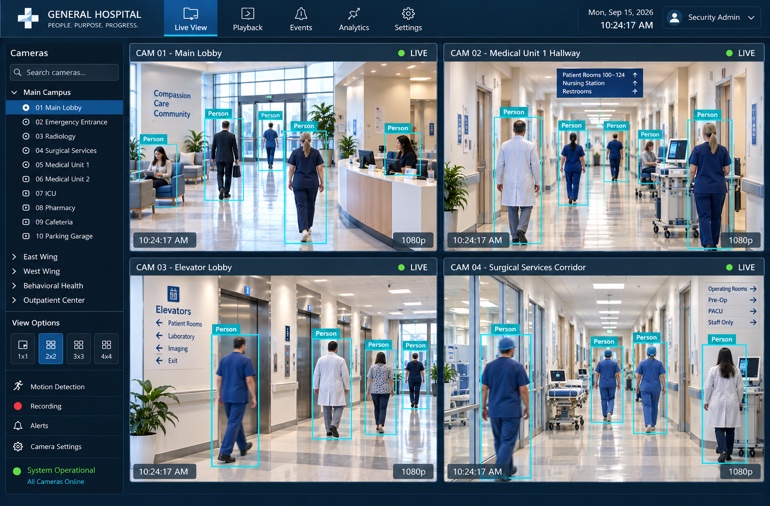 How Can AI Support Healthcare Security?
There is an article on security that covers some familiar material, but it also describes newer technologies organizations may want to consider as part of their security risk assessment. One example is AI-enabled camera technology that can identify behaviors associated with violence or unauthorized access in real time. Again, these technologies are not required.
Field Impact — Ask the Safety or Security Committee to Review Newer Technologies
We recommend that you have your safety or security committee review the technologies discussed in the article and determine whether any could supplement the organization’s existing security program. The decision should be based on identified risks, operational needs, and available resources.
 When Can a Hospital Request a Time-Limited Waiver or Equivalency?
The September Physical Environment Q&A is a useful refresher on Time-Limited Waivers (TLWs) and Equivalencies for certain Life Safety Code deficiencies that cannot be corrected during the normal Evidence of Standards Compliance period.
For qualifying NFPA deficiencies that cannot be corrected within the ESC period, hospitals and critical access hospitals may request a TLW or Equivalency. Remember that appropriate interim life safety measures must be implemented before requesting a TLW when required by the organization’s ILSM policy. For deemed organizations, Joint Commission reviews the request before forwarding it to CMS for approval.
Field Impact — Keep This Article With Your Post-Survey Resources
This is one of those EC News articles that is worth saving even if you do not need it today. Regulatory and facilities leaders should understand the TLW and Equivalency process before a difficult Life Safety finding occurs. Pay particular attention to the submission deadlines and required attachments. Once the request is submitted, additional documents cannot simply be added to the original submission.
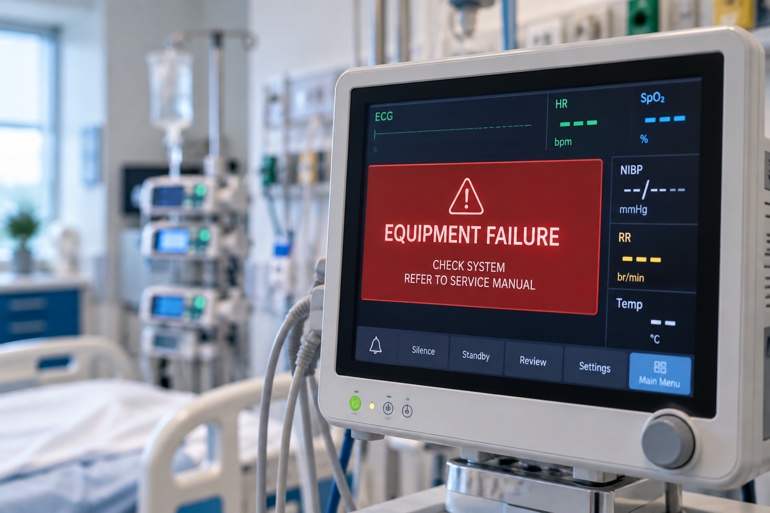 What Do You Do When Medical Equipment Fails?
EC News also includes a practical article and Medical Equipment Failure Response Procedures template. Joint Commission requires written procedures for responding to medical equipment failures. For hospitals and critical access hospitals, the requirements are addressed under PE.04.01.01.
The article reminds us that any equipment failure suspected of causing or contributing to a patient’s serious illness/injury, or death must be documented immediately as required by the Safe Medical Devices Act (SMDA) and must be reported to the FDA and the device manufacturer.
 Could EMTALA Requirements Become Part of Your Routine Accreditation Survey?
CMS has proposed allowing hospital accrediting organizations with deeming authority to assess compliance with certain EMTALA administrative requirements during routine accreditation and reaccreditation surveys.
This remains a proposed rule, but the requirements themselves are not new. What could change is when and how compliance with these administrative requirements is evaluated.
Source: CMS CY 2027 OPPS/ASC Proposed Rule
 New Guidance for Critical Access Hospitals Rural and Distance Requirements:
On August 21, CMS issued QSO-26-15-CAH, Critical Access Hospital (CAH) Evaluation of Compliance with the Rural and Distance Requirements. At the same time, CMS expired the previous CAH Recertification Checklist used to evaluate compliance with location and distance requirements.
This is worth reviewing if you are a CAH. The QSO memo provides current CMS guidance for determining compliance with the statutory rural location and distance requirements.
Field Impact — CAHs Should Review the New QSO Guidance
CAH regulatory leaders should review QSO-26-15-CAH and make sure the organization understands how continued compliance with rural and distance requirements will be evaluated. Retire copies of the expired checklist from regulatory reference materials.
Source: CMS QSO Memos — QSO-26-15-CAH
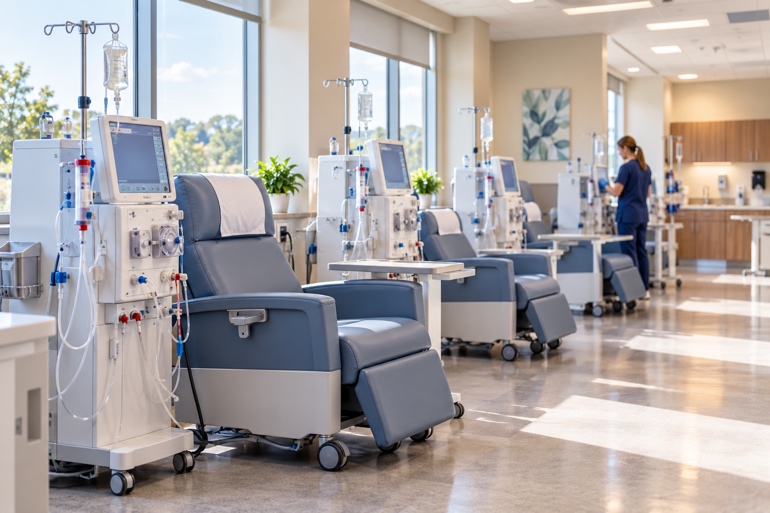 CMS Revises the ESRD Survey Guidelines and Adds Surveyor Worksheets:
CMS issued Transmittal 246 on August 17, revising State Operations Manual Appendix H, End-Stage Renal Disease Program Interpretive Guidelines and Survey Procedures. The revisions were effective immediately.
Field Impact — Dialysis Programs Should Review the New Appendix H
Organizations that operate ESRD services should provide the revised Appendix H to dialysis leadership and regulatory staff. Pay particular attention to the new surveyor worksheets and compare them with current readiness tools and practices.
 ACHC: Do Your Governing Body Minutes Demonstrate Oversight—or Just Attendance?
ACHC posted a useful article on September 4 on ASC governing body meeting minutes. This one caught our attention because ACHC includes examples of what its surveyors have been finding.
Examples include minutes that simply state “QAPI plan reviewed,” do not identify who is responsible for follow-up, or do not demonstrate that required follow-up was completed. ACHC recommends documenting key discussion points, decisions, actions, responsible individuals, and follow-up.
Although the article is written for ASCs, the underlying message is useful more broadly: meeting minutes should demonstrate that the governing body is exercising the oversight responsibilities assigned to it.
Source: ACHC — Are There Gaps in Your Meeting Minutes?
 DNV: ISO 9001:2026 Remains One to Watch
DNV has been preparing healthcare organizations for the anticipated revision of ISO 9001. Its healthcare resources include a July readiness briefing addressing expected changes. As of this draft, DNV has not posted a new U.S. NIAHO hospital accreditation requirement tied to the revision.
For DNV-accredited organizations, this is worth watching, but we would not recommend making changes based on draft ISO requirements.
Field Impact — Watch for the Final ISO 9001:2026 Standard
Keep ISO 9001:2026 on your regulatory watch list.

What’s Changing at CMS—
and is Your Organization Ready?
What CMS updates should be on your radar? How are the latest changes impacting the Conditions of Participation (CoPs)? And what do they mean for your organization’s compliance efforts, survey readiness, and patient safety?
Join CMS expert John Berry, RN, MSN, CPHQ, for a live discussion covering what healthcare leaders need to know, how the latest CMS updates may impact their organizations, and where to focus their attention now.
Have questions? Bring them. Get practical insight into today’s evolving CMS expectations—and the opportunity to hear directly from an expert.
CMS HOT TOPICS UPDATE:
LIVE WITH JOHN BERRY
Thurs, Oct 29 | 12:00 PM CST | Free, Live and Virtual
REGISTER NOW