Maintaining Eyewash Station Compliance – 8 Flaws We See in the Field
Through our on site survey interactions, we have identified a recurring pattern of oversight. If you are preparing for a survey, assess your facility for these specific issues:
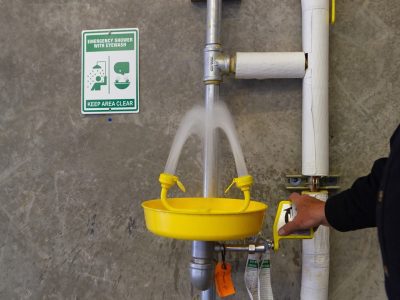
- Missing Stations – Corrosive chemicals are in use in areas where no eyewash station is present.
- Neglected Inspections – The station exists, but there is no documentation of the required weekly inspections.
- Blocked Access – The path to the station is obstructed by equipment, furniture, or a locked door.
- Distance Issues – The station is too remote from the area where hazardous chemicals are actually used.
- Inadequate Supply – The station is not plumbed and cannot provide the required 15–20 minutes of continuous flushing.
- Water Temperature – The station fails to provide “tepid” water, which is essential to ensure a victim can tolerate the full flushing duration.
- Contamination – Dust caps are missing, leaving the outlets grossly contaminated and potentially harmful to the eyes.
- Knowledge Gaps – Staff members in the immediate area are unable to demonstrate how to properly operate the equipment.
The Invisible Risks: New Chemicals and Contractors
We often see facilities where an eyewash station remains in a room where chemicals are no longer used. Conversely, we frequently see new risks introduced without a corresponding safety update. This happens when departments independently purchase new cleaning agents or when outside contractors (like environmental services) bring in their own chemical supplies. Your safety and facilities committees must stay synced with procurement and contracting to ensure your risk assessment remains current.
Action Steps for Facility Leaders
To ensure your organization is prepared and your staff is protected, we recommend the following:
- Review Past Reports – Check your last JC report. If eyewash stations were a prior finding, they will be a focal point on your next survey. You cannot afford a repeat finding.
- Conduct a Risk Assessment – Don’t wait for a surveyor to find a gap. Walk your units and identify where hazardous chemicals are used including those brought in by third parties.
Patton Healthcare Consulting – A Partner in Compliance
Navigating the nuances of the Environment of Care standards can be overwhelming. Hospitals don’t want “best practice.” They want “Will we pass? Patton will help you answer that.
Ready to secure your next survey outcome? Contact us today to schedule a time to discuss your organization’s specific needs.
 Most Frequently Scored Standards
Leave a Reply