
May 2026
Inside This Issue

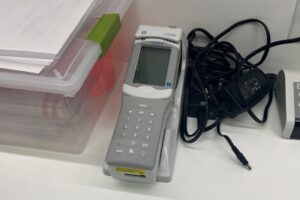 Laboratory i-STAT Devices:
Joint Commission has now posted their Perspectives replacement newsletter and there are two articles of importance to readers who offer laboratory services. The first announcement is the result of a new CMS directive governing the i-STAT system blood analyzer. Effective immediately, Joint Commission accredited laboratories must incorporate the i-STAT device in their correlation process every six (6) months in accordance with standard QSA.02.08.01. In the past only the i-STAT cartridges were required to be correlated, however the i-STAT device is considered a blood analyzer, not just a blood reader.
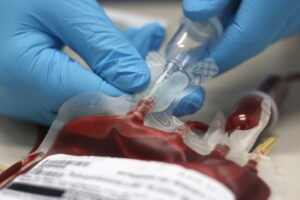 Laboratory Blood Administration and Critical Results:
The second news item for laboratories is that JC hospital and laboratory surveyors will each direct their focus of attention to blood administration practices and critical result reporting practices to those portions of each process most applicable to either laboratory or nursing and other clinical staff. For example, on blood administration the lab surveyors will focus on activities prior to when blood administration starts and nursing monitoring is initiated. Similarly, lab surveyors will evaluate the critical results reporting processes within the laboratory and hospital surveyors will evaluate the nurse and physician critical results reporting processes.
 Micro-Credentials:
While looking for the newsletter, we also noted there is a posting on the JC website of a recent Modern Healthcare interview with Dr. Perlin, President and CEO of JC and Stephanie Mercado, CEO of the National Association of Healthcare Quality. You can watch the discussion in its entirety, but the announcement is that JC is endorsing a new microcredential that NAHQ has developed for accreditation and regulatory compliance staff. Dr. Perlin made it clear that acquisition of the credential is not mandated by JC, however JC is endorsing it as something worthwhile that may be of benefit to accreditation leaders. You can also read more about this competency process by looking at the NAHQ home page.
 Mechanical Systems Preventative Maintenance:
The lead article in this month’s edition of EC News is about preventative maintenance of mechanical systems; heating, ventilation, air conditioning, (HVAC), water supplies, exterior grounds and the building, and emergency power supply systems as the summer heat arrives. This article ties in nicely with a second article published in JC’s April issue of Emergency Management Leader relative to preparing for heat emergencies, discussed later in this newsletter.
Relative to HVAC the requirements for different hospital spaces are contained in ASHRAE 170 and EC News suggests four (4) recommendations for preparing for the summer heat:
- Deep clean ventilation coils.
- Adhere to filter replacement frequencies using the appropriate filtration efficiencies.
- Verify chilled water plant readiness while auditing system control settings including set points and deviation alarms.
- Regular inspection and maintenance of exhaust fans and address damaged belts, failing motors, and wrong directional spinning.
Relative to water supplies and potential waterborne pathogens, EC News suggests that if census goes down during summer months, water stagnation may occur. This creates a need to flush plumbing fixtures in unused areas.
For the building, EC News suggests roof inspection for damage, proper functioning of gutters and drains, as well as inspection of window seals and fixture penetrations that might allow moisture or vermin to get into the building. An inspection of the grounds should look for potential tripping hazards as well as trees and bushes that might allow intruders to hide. Such trimming should also ensure visibility of all wayfinding signage. They also suggest trimming any trees or bushes that might give vermin a bridge to reach the building. They also recommend verifying clear pathways out of the building that may have been overgrown or used for storage that should not be present.
Lastly for the emergency power supply EC News suggests the following actions to take including:
- Clean air intakes and radiator grills, removing debris from generators
- Re-review your emergency power supply back up mitigation plan to verify:
- An approved and tested alternative strategy, with a vendor agreement for emergency equipment installation if needed.
- Availability of agreements to receive additional fuel supplies during an extended power outage.
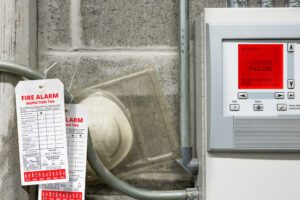
Avoiding Immediate Threat/Immediate Jeopardy Declarations:
CMS refers to these situations as immediate jeopardy and JC calls it immediate threat but having surveyors from either agency declare such a situation at your organization is something you want to never experience. This month’s EC News provides multiple examples of situations in the physical environment that can lead to an immediate threat declaration.
One very broad example of such a risk could be a significantly compromised fire alarm system, a failed sprinkler system, and failed emergency power supply or medical gas system. Unfortunately, we have seen examples of each one of these crisis situations, where there is a panic call from the organization, seeking a consultant to help get them out of this predicament. One common denominator in each of these unfortunate situations is that the organization had an internal or vendor inspection report that warned them of the critical system failure, but they had not taken corrective action to fix the critical problem immediately, or at least before their survey.
Every organization has a large binder or electronic database of mandatory inspection reports for the old EC.02.03.05, now referenced as PE.04.01.01. The value of these inspections of critical fire safety systems, medical gas safety, etc., is not to have the reports on file, but to verify or react to these reports to ensure such safety systems are fully operational.
Another frequent issue that can lead to an immediate threat declaration is unrecognized or unmitigated ligature hazards in the behavioral health environment. Here the key is not to feel comfortable knowing that a patient has not yet used the potential ligature hazard for self-harm and to conclude that therefore it is not a hazard. Instead, the thought process needs to be that even though no patient has yet used that potential hazard, it remains a potential hazard that we will remove or effectively mitigate whenever that space is in use.
This EC News article can be very helpful, and we would suggest using it to self-assess your potential risks and processes for reacting to flawed inspection reports promptly.
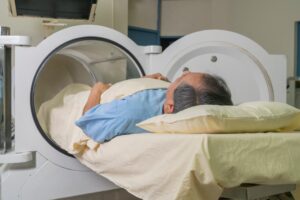 Hyperbaric Oxygen Facilities:
EC News has an informative article on the unique risks and requirements for managing the physical environment in hyperbaric oxygen facilities. Back in July of 2025, EC News had published one of the JCR checklists for self-evaluation of hyperbaric services. This article touches on many of the same issues, but the narrative format can sometimes be a better or more instructional a format to drive key messages home. You might want to take a look at this article and the July 2025 checklist together to verify compliance with this service area.
 Medical Gas Storage:
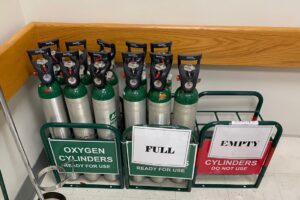
In December 2025, EC News had a narrative article on medical gas storage detailing the storage and signage requirements. Somewhat like the above discussion of hyperbaric oxygen facility requirements, there is now a JCR checklist developed that you can use to verify compliance with all the detailed requirements for medical gas storage. This month’s issue of EC News contains the link to the medical gas storage checklist.
 Brown University Shooting Case Study:
The lead article is about the Brown University shooting last December and the impact on the Rhode Island Hospital, a nearby clinical teaching and research site for the University. Although the shooting took place at the university campus site, the shooter was not found until four (4) days later. The hospital had to quickly treat victims of the shooter and initiate its own emergency procedures including lock down to protect staff and patients. The hospital enhanced its visitor screening procedures to vet visitors through patients and families. The hospital also had 40 access points for entry to the hospital that had to be supervised. After the experience the hospital reduced the number of entrances to a more manageable 12, with others becoming exit only.
 Hospital Flooding:
EM Leader also has an article on potential hospital flooding situations with links to FEMA flood maps and potential suggestions to reduce the potential risk and implications of flood damage. EM Leader provides a link to a 2007 FEMA publication, Design Guide for Improving Hospital Safety in Earthquakes, Floods, and High Winds.
We had previously discussed a portion of this extensive resource in our newsletter published in November 2020. Relative to flooding there are many useful suggestions such as re-grading the hospitals site, building levees, elevating either the hospital or key services that are more vulnerable to flooding damage, installing flood walls, and making the building watertight. If flooding is a concern on your facilities HVA, you will want to carefully analyze the EM Leader article and the FEMA reference for guidance.
 Heat Emergencies:
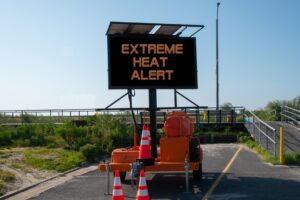
As summer arrives it is again time to re-evaluate preparedness for heat emergencies. EM Leader has a nice refresher article on this subject and potential suggestions. One such suggestion for patient heat emergencies is to have access to a supply of single use body bags and ice to immerse the patient for rapid cool down.

Mass Casualty Exercise:
Lastly, EM Leader has an article discussing a drill for a mass causality event. This article includes a link to a PowerPoint drill scenario and a playbook that can be used to conduct your own drill.
 DNV: Healthcare Symposium:
DNV has posted links for those who would like to submit an application to host a session at their 2026 Symposium. Submission abstract information can be found at: Presentation Abstracts 2026 DNV Healthcare Symposium. Act quickly though, we noted the email included a deadline for submission of 6/30/26, but the link mentions a 5/29/25 deadline.
If you are just interested in being a participant at the DNV fall symposium, the link to register is found on their 2026 DNV Healthcare Symposium event summary page.
 DNV: Innovation of the Year Award:
They also have an Innovation of the Year award that you can seek. The link for that information is available at: 2026 DNV Healthcare Innovation of the Year Award. The Innovation of the Year email deadline is July 15, but again the link mentions 5/29 so act quickly if interested.
 ACHC: Deemed Status:
Last month we discussed the CMS QSO on removal of deemed status. ACHC has done a similar summary that might be another learning opportunity to try and understand the deemed status removal situation. Their analysis can be found on their Q&A for Complaints: Regarding Organizations with Deemed Status Accreditation.
 Nursing Home Aide Competency:
CMS posted one new QSO memo in April. It is QSO 26-08 dated April 8, 2026, and it is directed to the nursing home industry. It is titled “Clarification Regarding Nurse Aide Competency Evaluation Program and Flexibilities.” CMS desires to establish minimum standards, but the flexibilities are intended to try and meet staffing needs. If you operate a nursing home, you will want to review these requirements.
CONSULTANT CORNER
As healthcare organizations continue to navigate evolving regulatory expectations and operational challenges, Patton Healthcare Consulting remains committed to providing experienced, practical guidance tailored to the needs of the organizations we serve.
This month, we are excited to introduce several new additions to our consulting team, further strengthening the breadth of expertise and leadership available to our clients. Please join us in welcoming Dr. Linda M. Shepherd, DNP, MBA, BSN, RN, NEA-BC, FAAN, Principal Consultant; John Berry, RN, MSN, SQIL, Principal Consultant; Kathy Eichner, RN, MSN, CPHQ, CJCP, Principal Consultant; and Dr. Tracela “Traci” Vaden, MD, CPE, FACP, CPHQ, Senior Consultant.
Together, they bring extensive experience across healthcare leadership, accreditation, quality, patient safety, physician engagement, and operational improvement—further enhancing the support and insight available to organizations nationwide.
We are pleased to welcome Linda, John, Kathy, and Traci to the Patton Healthcare Consulting and Barrins & Associates team and look forward to the knowledge, leadership, and experience they will bring in supporting healthcare organizations across the country.

John Berry
RN, MSN, SQIL
“I’m excited to begin this new chapter with HBS, Patton, and Barrins, collaborating to advance patient outcomes through evidence-based solutions, survey readiness, risk mitigation, and continuous improvement across healthcare organizations.”
Want to learn more?
👤 View John’s full bio here.
Want to connect?
📞 (512) 442-1876

Dr. Linda Shepherd
DNP, MBA, BSN, RN, NEA-BC, FAAN
“Joining the team is an exciting opportunity to support healthcare organizations in advancing quality, patient safety, high reliability, and operational performance. I look forward to collaborating alongside this dedicated and forward-thinking team.”
Want to learn more?
👤 View Linda’s full bio here.
Want to connect?
📞 (540) 239-0703

Kathy Eichner
RN, MSN, CPHQ, CJCP
“Excited to join the HBS, Patton and Barrins team and eager to serve organizations with solutions that optimize quality, safety, ongoing readiness and performance improvement. I look forward to collaborating with this progressive and talented team.”
Want to learn more?
👤 View Kathy’s full bio here.
Want to connect?
📞 (312) 505-5185

Dr. Traci Vaden
MD, CPE, FACP, CPHQ
“Honored to join the HBS, Patton, and Barrins team and eager to collaborate in advancing patient outcomes by developing innovative solutions based upon collective knowledge specific to each organization’s culture and goals.”
Want to learn more?
👤 View Traci’s full bio here.
Want to connect?
📞 (803) 517-2497
Julia Finken, RN, BSN, MBA, CPHQ, CLSSMBB
Julia.finken@hbsinc.com
Kurt Patton, MS, RPh
kurt@pattonhc.com
Laurie Farmer, MSN, RN
laurie.farmer@hbsinc.com
Kathy Eichner, RN, MSN, CPHQ, CJCP
Kathy.Eichner@HBSinc.com
Jen Cowel, RN, MHSA
jencowel@pattonhc.com
John Rosing, MHA, FACHE
johnrosing@pattonhc.com
Dr. Linda M. Shepherd, DNP, MBA, BSN, RN, NEA-BC, FAAN
Linda.Shepherd@HBSinc.com
John Berry, RN, MSN, SQIL
John.Berry@HBSinc.com